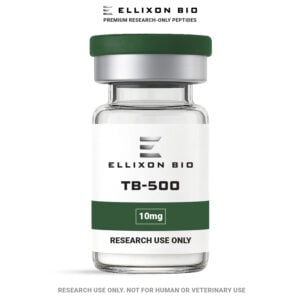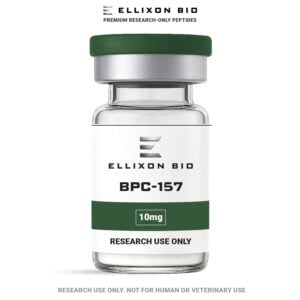


This research-use-only blend combines BPC-157, TB-500 (thymosin β4), and GHK-Cu to study tissue remodeling, protein function, and redox-linked signaling. Investigations focus on ECM dynamics, fibroblast behavior, endothelial signaling, and comparative synergy vs. single-agent controls. Not intended for diagnostic or therapeutic use.
- Matrix interaction and cytoskeletal organization
- Endothelial and fibroblast signaling
- Stress-response and remodeling pathways
Glow | Tissue Remodeling & Protein Function
| General | |
| Name | Glow Blend (RUO): BPC-157 + TB-500 + GHK-Cu |
| Component Quantities (per vial) | BPC-157 10 mg | TB-500 10 mg | GHK-Cu 50 mg |
| Component A — BPC-157 | |
| Synonyms | Bepecin | PL-14736 |
| Sequence | GEPPPGKPADDAGLV |
| Molecular Formula | C62H98N16O22 |
| Molecular Weight | ≈1419.5 g/mol |
| CAS Number | 137525-51-0 |
| Component B — TB-500 (Thymosin β4) | |
| Sequence | Ac-Ser-Asp-Lys-Pro-Asp-Met-Ala-Glu-Ile-Glu-Lys-Phe-Asp-Lys-Ser-Lys-Leu-Lys-Lys-Thr-Glu-Thr-Gln-Glu-Lys-Asn-Pro-Leu-Pro-Ser-Lys-Glu-Thr-Ile-Glu-Gln-Glu-Lys-Gln-Ala-Gly-Glu-Ser |
| Molecular Formula | C212H350N56O78S |
| Molecular Weight | ≈4963.44 g/mol |
| CAS Number | 77591-33-4 |
| Component C — GHK-Cu (Copper Tripeptide-1) | |
| Sequence | Gly–His–Lys (monocopper complex) |
| Molecular Formula | C14H22CuN6O4 |
| Molecular Weight | ≈403.9 g/mol |
| CAS Number | 89030-95-5 |
| Formulation & Handling | |
| Appearance | White to off-white lyophilized powder |
| Solubility | Soluble in sterile water or bacteriostatic water |
| Purity | ≥99% (HPLC) |
| Storage Guidelines | • Lyophilized: ≤0°F (–18°C), dry, protected from light • Reconstituted: 36–46°F (2–8°C); avoid repeat freeze–thaw • Long-Term: Keep dry and frozen until use |
Ellixon Bio Quality Advantage
- Purity & Identity: ≥99% | HPLC & MS validated
- Endotoxin & Sterility: <0.05 EU/mg | Third-party verified
- Stability & Process: Controlled nucleation lyophilization | Stability-focused procedures
- Formulation & QA: PhD-Formulated | GMP / ISO-Aligned manufacturing
- Packaging: Luxe Fridge-Ready Box
Category Overview | Tissue Remodeling & Protein Function
These peptides are used to explore how proteins fold, interact, and help maintain cellular structure. They are often studied in pre-clinical models focused on tissue architecture, protein turnover, and how cells respond to structural stress.
Exciting Areas of Study
- Study cell behavior during tissue formation & structural remodeling
- Investigate how peptides influence protein folding and turnover
- Explore extracellular matrix (ECM) structure and dynamics
- Examine how fibroblasts shape tissue architecture in vitro
- Assess changes in cellular scaffolding in response to stress
Glow | Research Modeling & Applications
- Compare blend synergy vs. single-agent responses in remodeling assays
- Profile endothelial, ECM, and cytoskeletal cross-talk
- Evaluate stress-adaptation and recovery dynamics in vitro
Research Use Disclaimer
This product is supplied for laboratory research use only (RUO) and is intended solely for qualified professionals in a controlled research setting. It is not a drug, food, dietary supplement, cosmetic, or medical device, and is not intended for human or veterinary use or for any diagnostic, therapeutic, or clinical application. It is not for household use.
No statement on this page has been evaluated by the U.S. Food and Drug Administration. Nothing herein is intended to diagnose, treat, cure, or prevent any disease, nor to suggest any dosage, route, or method of administration. Ellixon Bio makes no representation or warranty, express or implied, regarding fitness for any purpose other than research and provides no medical or professional advice. The purchaser and end user assume full responsibility for safe handling, storage, and use in accordance with all applicable laws, regulations, and institutional safety protocols, and accept all associated risk and liability.
See our Terms & Conditions and our Research Compliance Disclaimers for complete terms.